
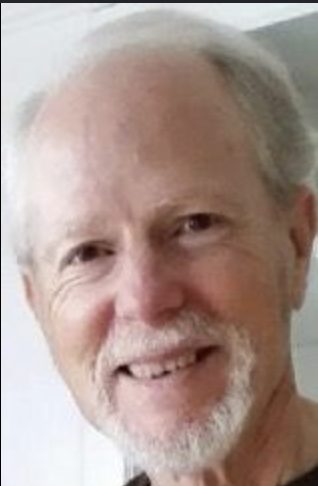
Dan Clark, author of A Privileged Life: Memoirs of an Activist, served as the first General Secretary of PBI-USA and organizer of the Central America Project with the international headquarters at his home in Washington state. He sparked the move of the organization’s headquarters to Philadelphia in 1983. After leading the second exploratory Central America team, he helped coordinate the founding of PBI-USA operating through the recognition of the international.
Eleven mission-driven pioneers gathered on Grindstone Island from August 31-September 4, 1981, and decided to form PBI. Three of them took on organizational roles. Charley Walker, who had a full-time job with the Friends (Quaker) Suburban Project in the Philadelphia area, was the Coordinator; Ray McGee, a UCC minister with California-based Peaceworkers organization whose main goal was to get the UN to offer or sponsor unarmed peacekeepers as part of its own services, agreed to serve as provisional Treasurer. Dan Clark said he could spend a year full-time on the initial organizing, and offered to move to New York with his family, which would have been a hardship since they were located way out in the other Washington. Others, particularly George Willoughby when he heard this, said that wouldn’t be nearly long enough, so instead Dan agreed to serve as the first General Secretary of PBI with the international headquarters in his home law office in Walla Walla.
So, the international office was in Washington state at first, from which they put out a PBI newsletter, began recruiting additional members of the International Council, and exploring their first project in Central America. Dan felt like somewhat of a lone wolf out here. He was the PBI Secretary as well as chair and organizer of the Central America Project, our first active Project, and was doing most of the communicating and paperwork. Nancy Ball, who was the clerk of Walla Walla Friends Meeting and a friend of Dan’s, had become the treasurer after Ray stepped down.
So Dan finally said to everyone that we needed to move the international office to a large urban area in December of 1983. They had a PBI General Meeting in Mexico City, and Dan had recruited George Willoughby who seemed like the natural choice to take over as Secretary at that point. So in January 1983, the team moved the international office to Philadelphia, where George became the new International Secretary and chair of the Central America Project Committee. The international office remained in Philadelphia until 1992, when it moved to London.
Around 1989, Dan was visiting the office when a call came in from Sri Lanka that lawyers there were being disappeared after they petitioned for habeas corpus writs for people who had also been disappeared. That was the beginning of the Sri Lanka Project. During the time of the office in Walla Walla, he organized the Central America Project Committee, which met in Philadelphia for the first time, face-to-face, in November 1982. After Dan led the second PBI exploratory team to Central America, where they visited several countries to see where they might establish a project. Subsequently, PBI International contracted with PBI Canada (our first country group) to administer the Central America Project after they had appointed Joleigh Commandant as Central America Project Director on George Willoughby’s recommendation. Joleigh was part of the Movement for a New Society with George, and was based in Toronto.
In the first years, they simply used the PBI International nonprofit as the direct administrator of projects, until PBI Canada became the first incorporated country group. This was done largely for tax purposes. Because they were raising funds in Canada, they needed to have a Canadian corporation. Although PBI itself is incorporated in the U.S., after PBI-USA was founded, the International also contracted with PBI-USA to administer the Mexico Project (just as PBI Germany administers the Nepal Project today). So this has been an as-needed evolution from a single international corporation organized in the United States under the laws of the state of Washington to several affiliated country groups, and Projects, some of which are also incorporated, but all operate through recognition by the International and adhere to whatever common understandings are in place.
You can read more of Dan Clark’s reflections in a longer article on his website at danielclark.zoomshare.com/2, titled “Peace Brigades International—Roots and Early Years,” which is excerpted from his book, “A Privileged Life: Memoirs of an Activist,” available through Amazon.com and other online booksellers.