In her own words: Olga Silva, Humanidad Vigente, Colombia
The following is from an interview conducted in 2017 with Olga Silva by PBI UK.

Women and minority rights activists around the world are working to create positive change in their communities. Women human rights defenders face many of the same challenges as their male counterparts. However, many face additional obstacles and threats because they challenge the status quo twice over – through their work and by challenging (by their very existence) accepted norms, traditions, perceptions and stereotypes about femininity, sexual orientation and the role and status of women in society. As a result, they are vulnerable to threats, stigma, rejection by family and community, and violence.
The following is from an interview conducted in 2017 with Olga Silva by PBI UK.
I was born in Kibera and I grew up in Kibera; growing up here was both a privilege and a struggle. Life is difficult in Kibera and we live in poverty here, but this place makes a woman strong and I believe that I am strong today because I grew up in Kibera.
I come from a family of four daughters. My father was never really in the picture, but I never felt the absence of a father-figure in the house; Mama has been such a role model in that sense. She would say “whatever you want to do, you can do it.” Whenever we would complain about not having a brother to help us fix household things, she would push us to learn how to do it ourselves.
The Indonesian NGO ELSAM (Institute for Research Policy and Advocacy) has made the book Writing for Rights: Human Rights Documentation from the Land of Papua available for free download on their website at http://elsam.or.id/2017/05/writing-for-rights-human-rights-documentation-from-the-land-of-papua/
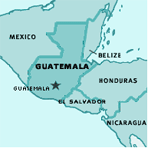 Guatemala’s brutal 36-year civil war ended in 1996.
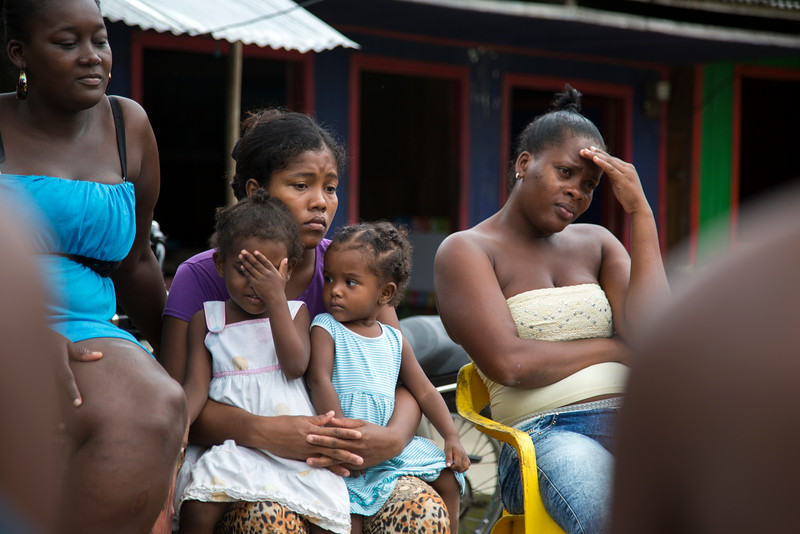
This year in Colombia, human rights defenders and social leaders have faced 232 threats, 21 attacks and 70 assassinations, 31 of which occurred after the bilateral ceasefire with the FARC went into effect.
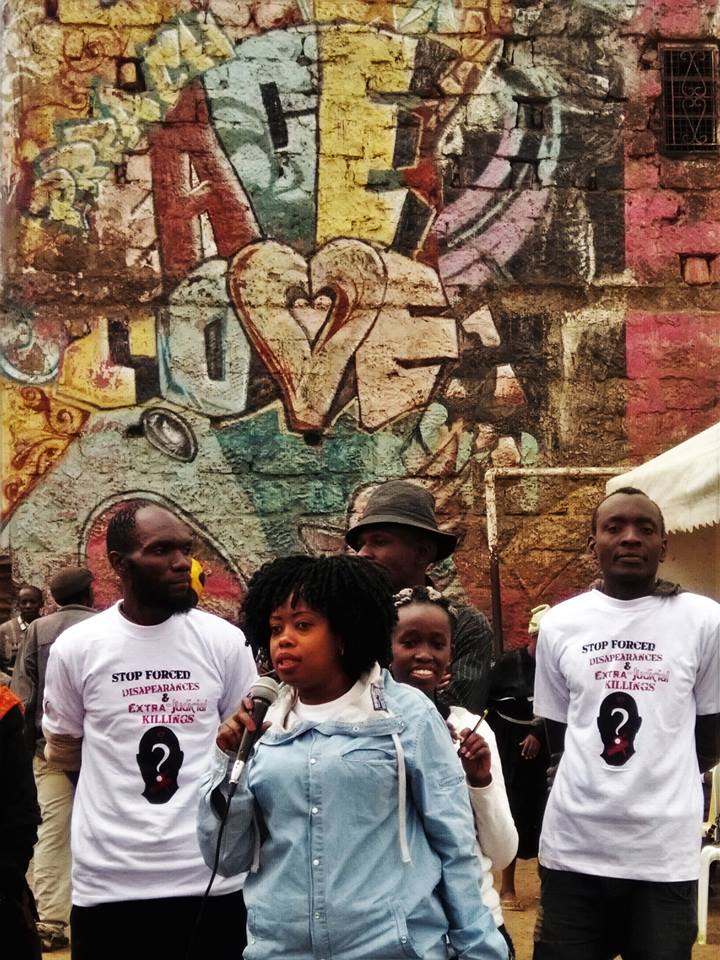 Grassroots activists from PBI Kenya's partner
